
Table of Contents
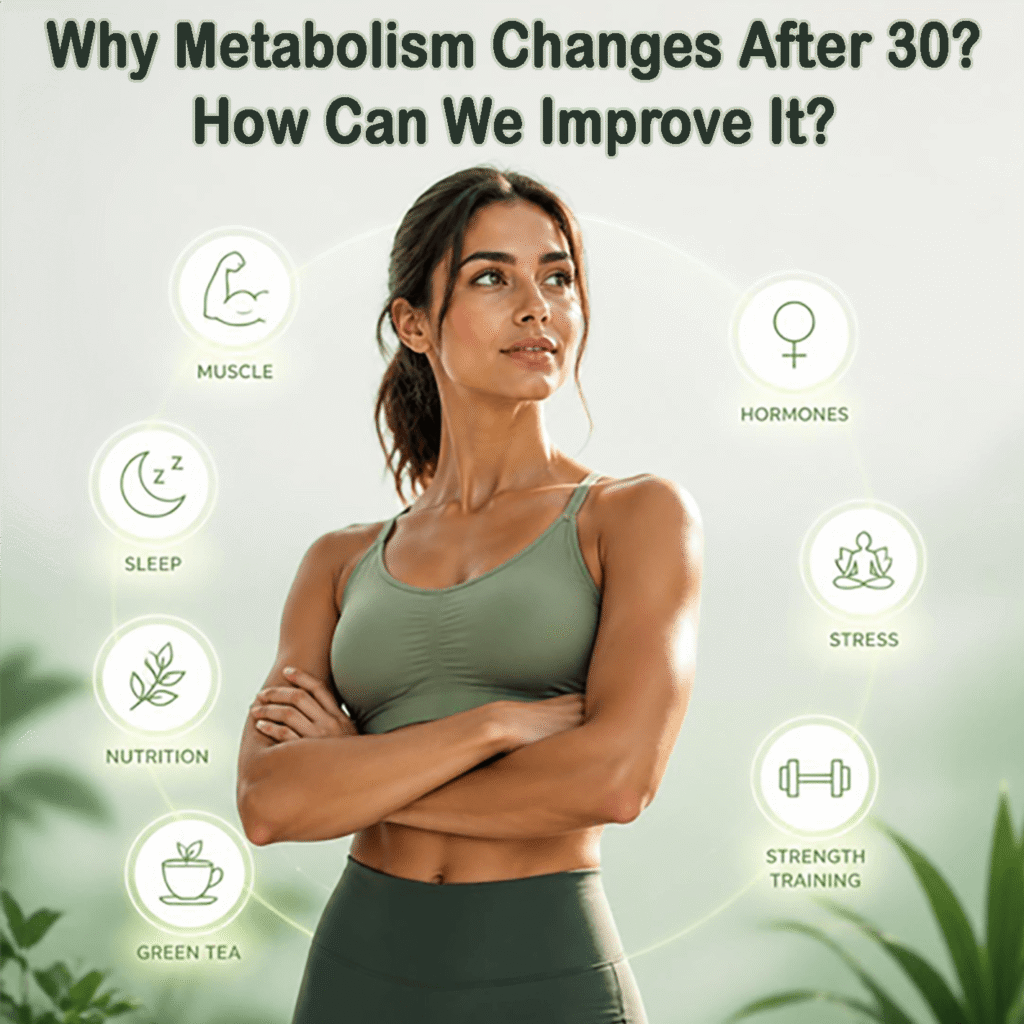
If you’ve noticed it’s harder to keep weight off the way you could in your twenties, you’ve probably heard the same explanation everyone gives: “metabolism slow down after 30.” It’s repeated so often that it sounds like settled fact — in gym locker rooms, in comment sections, in ads for supplements that promise to “reignite” something that supposedly broke. It’s such a widely accepted idea that most people never stop to check whether it’s actually true.
When you look at the research, the story is more interesting — and more useful — than a simple slowdown. It’s also a more hopeful story, because it means the problem isn’t a mysterious internal switch flipping off somewhere in your thirties. It’s a set of specific, identifiable, and largely fixable changes happening around your metabolism, not necessarily inside it.
Here’s what’s really happening in your body after 30, why women often feel it more acutely than men, and which of the popular “fixes” are backed by evidence versus which ones are just marketing dressed up as science.
The Surprising Truth: Your Metabolism Isn’t Actually Crashing at 30
This is the part most articles skip. A large-scale analysis of metabolic rate across the human lifespan found that resting metabolism stays relatively stable from age 20 all the way to around 60, with the steepest declines only showing up after that point. In other words, your basal metabolic rate at 32 is likely very close to what it was at 24 — the number of calories your body burns just keeping you alive hasn’t meaningfully dropped.
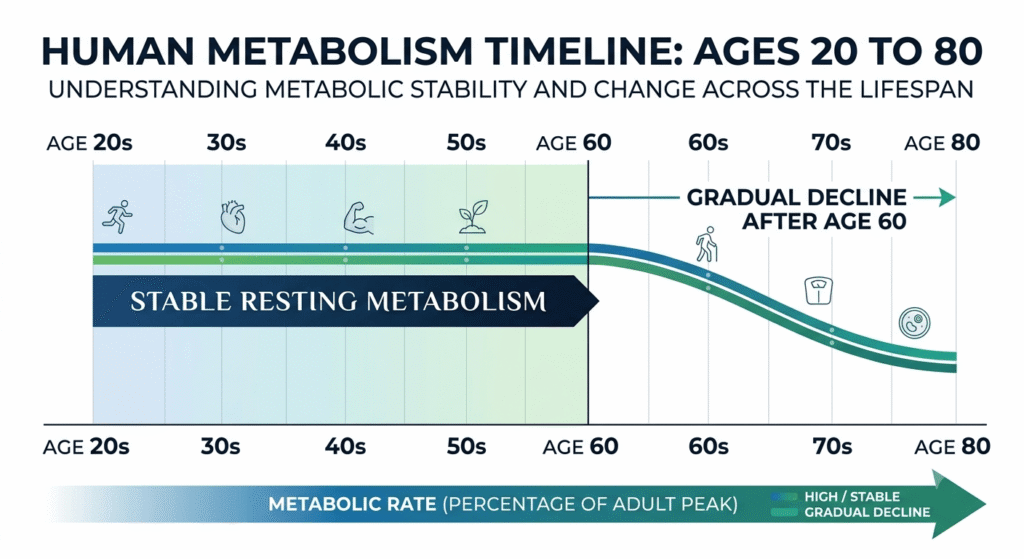
This runs counter to almost everything popular wellness content tells you, which is part of why it’s worth sitting with. It doesn’t mean nothing has changed — it means the change isn’t where most people assume it is. The instinct is to blame a slowing internal engine; the more accurate picture is that the engine is roughly the same, but the vehicle around it (your muscle mass, your hormones, your daily movement, your stress load) has shifted enough to change how efficiently you burn through what you eat.
So why does it feel like everything changed the moment you hit your thirties? Because several other things really are shifting underneath the surface — they just aren’t your metabolism “breaking.” Understanding the actual mechanism matters, because it changes what you should spend your time and money fixing.
What’s Actually Causing Metabolism Slow Down After 30
1. Muscle Mass Quietly Declines
Starting in your thirties, both men and women naturally lose roughly 3–8% of muscle mass per decade if that muscle isn’t actively maintained. Muscle tissue burns more calories at rest than fat tissue does, so less muscle means your body simply needs fewer calories to get through the day — even if your habits haven’t changed at all.
This is a gradual, largely invisible process, which is exactly why it sneaks up on people. Nobody wakes up one morning with visibly less muscle. Instead, the scale creeps up half a pound at a time over several years, clothes fit differently, and by the time it’s noticeable, it looks sudden even though it’s been building for a decade. This is also why the “eat exactly what I ate in my twenties” strategy stops working — the body doing the eating is no longer carrying the same amount of metabolically active tissue.
2. Hormonal Shifts Start Earlier Than You’d Think
For women specifically, estrogen doesn’t wait for menopause to start moving. Levels can begin a gradual decline around 30, with a more noticeable drop by the mid-thirties. Estrogen plays a real role in how your body stores fat and regulates appetite, so even modest shifts can change how your body responds to the same diet and exercise routine you’ve always done. This is separate from — and happens well before — the more dramatic hormonal changes of perimenopause and menopause.
What makes this confusing is that these early shifts are subtle enough that routine bloodwork often looks “normal,” so there’s rarely a clear signal telling you something has changed. Many women only connect the dots in hindsight, after noticing a pattern of fat redistributing toward the midsection, energy dipping at different points in the day, or cravings behaving differently around the same time each month. None of this means something is wrong with you — it’s an expected, well-documented biological transition, just one that starts earlier and moves more quietly than most people are told.
3. Cortisol and Life Stage Stack the Deck
Thirty is often the decade of career pressure, caregiving responsibilities, less sleep, and higher baseline stress. Elevated cortisol doesn’t just feel bad — it’s associated with increased cravings for high-calorie, high-sugar foods and a tendency to store fat around the abdomen. Combine that with less time for meal prep and exercise, and you get a pattern that looks metabolic but is really behavioral and hormonal working together.
4. Activity Drops Without You Noticing
Desk jobs, less walking, and more sedentary evenings all quietly reduce the calories you burn through daily movement (what researchers call NEAT — non-exercise activity thermogenesis). This is one of the largest, most controllable pieces of the puzzle, and it’s rarely about metabolism at all.
Why Women Often Feel This More Than Men
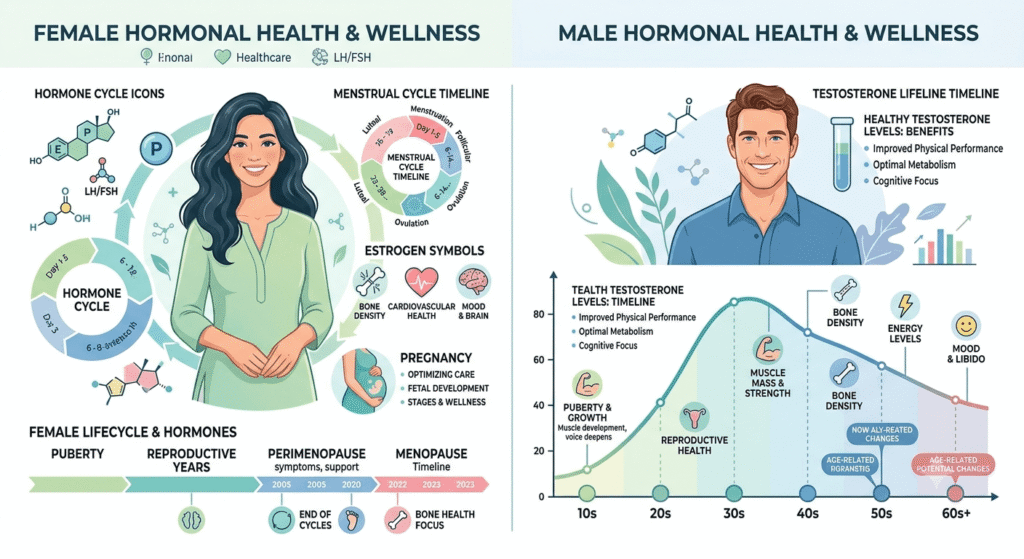
Men experience a slower, steadier decline in testosterone through their thirties and forties. Women’s hormonal timeline is less linear — natural fluctuations in the cycle, pregnancy and postpartum recovery, and the lead-up to perimenopause all create distinct windows where fat distribution, appetite, and energy levels shift in ways that can feel sudden rather than gradual. This is one reason generic “eat less, move more” advice can feel like it stops working even when nothing about a woman’s discipline has changed
Common Metabolism Myths, Fact-Checked
Before getting into what actually works, it’s worth clearing out a few claims that circulate constantly but don’t hold up well:
- “Eating small, frequent meals boosts your metabolism.” Meal frequency has a negligible effect on total daily energy expenditure. What matters far more is total calories and protein intake across the day, not how many times you eat them.
- “Metabolism testing kits can tell you exactly why you’re not losing weight.” These are a snapshot of resting energy expenditure, not a diagnosis. They don’t account for activity level, hormones, or sleep — the factors that usually matter more.
- “Detox teas and fat-burning pills ‘reset’ your metabolism.” There’s no credible mechanism by which a short-term product resets a metabolic rate that was never broken in the first place. Any early weight change from these products is typically water weight or reduced calorie intake, not a metabolic shift.
- “Once your metabolism slows, there’s nothing you can do.” This is perhaps the most damaging myth, because it’s simply false. Muscle mass, sleep, stress, and activity level — the actual drivers of the changes people feel — all respond to consistent effort at any age.
What Actually Helps (Backed by Research, Not Hype)
Strength Training Is the Single Most Effective Lever
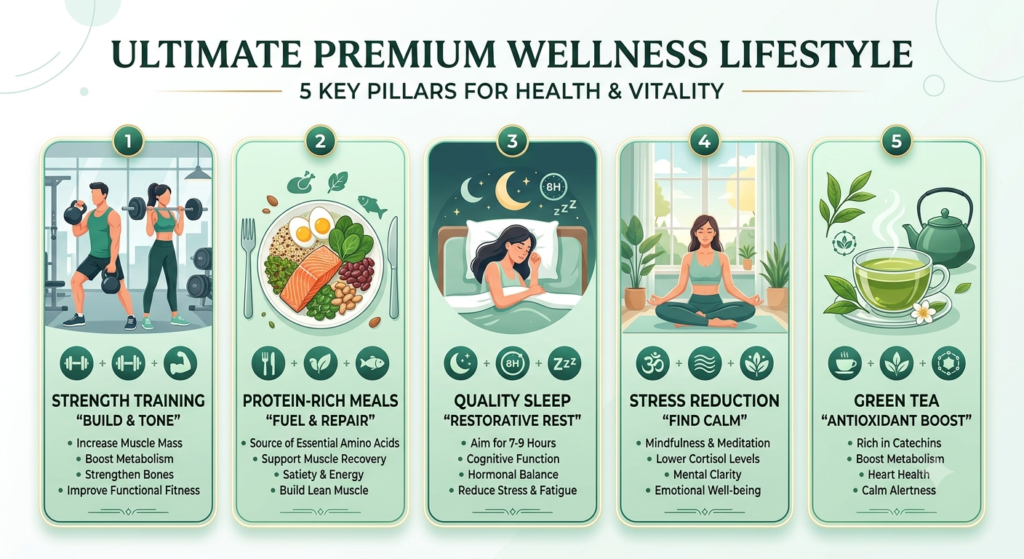
Because muscle loss is one of the biggest drivers of a slower resting metabolism, rebuilding and maintaining muscle through resistance training is consistently identified as the most effective countermeasure. Even two to three sessions a week can meaningfully offset age-related muscle decline.
Protein Intake Matters More Than It Used To
As muscle becomes harder to maintain, adequate protein at each meal helps your body preserve what you have and build what you’re training. This becomes more important with age, not less.
Sleep Is a Metabolic Intervention, Not a Luxury
Poor sleep directly disrupts the hormones that regulate hunger and satiety (ghrelin and leptin), which is part of why short sleep is so reliably linked to weight gain independent of diet.
Green Tea Catechins: What the Studies Actually Show
Green tea’s compounds — particularly EGCG, its most active catechin — have been studied fairly extensively for their effect on energy expenditure and fat oxidation. A controlled study published in the journal Obesity found that a green tea extract high in catechins reduced body fat and improved cardiovascular risk markers in humans. Separate research suggests tea catechins combined with caffeine can modestly increase 24-hour energy expenditure by around 3–4%, and catechin consumption alongside resistance training has been shown to improve body composition, waist circumference, and lean muscle mass more than resistance training alone.
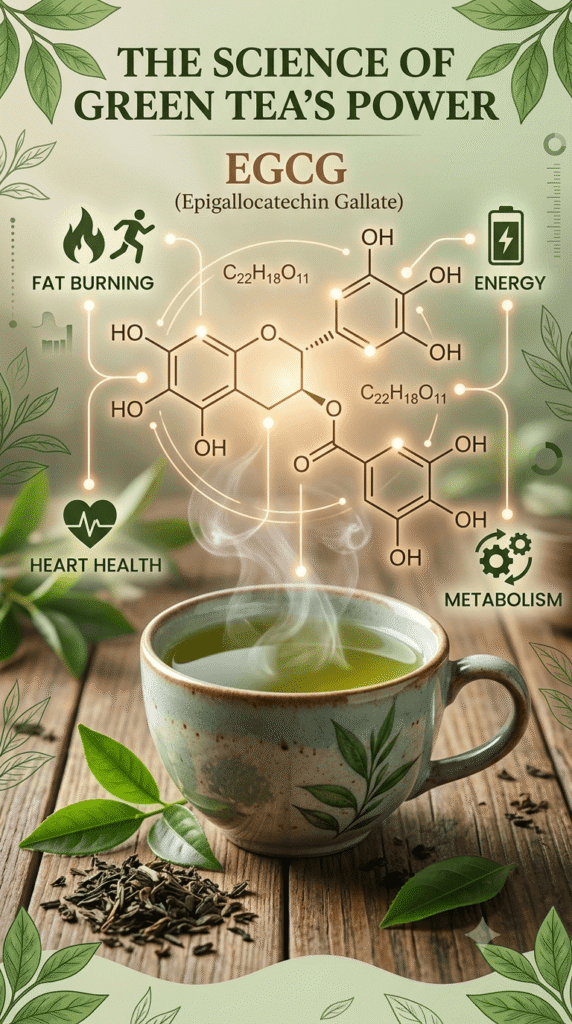
It’s worth being honest about the size of this effect: a 3–4% increase in energy expenditure is meaningful but modest — it’s a supporting piece of the puzzle, not a replacement for strength training, protein, sleep, and activity levels. Some individual studies also show no significant effect, so response likely varies by person, dose, and what else is going on in their routine.
Here the most effective suggestion can be Matcha Extreme used as your regular green tea. Check out our Matcha Extreme Review and Buying guide here. Or you can also check another alternative product which is Keto Actives for boosting your metabolism.
Managing Stress Isn’t Optional
Since cortisol is so closely tied to abdominal fat storage and cravings, stress management — even simple things like a consistent wind-down routine or short daily walks — has a real, if harder-to-quantify, metabolic payoff.
A Simple Way to Think About It
Instead of “my metabolism is broken,” a more accurate (and more empowering) reframe is: “my body composition, hormones, and daily habits have shifted, and each of those is something I can actually influence.” Metabolism itself isn’t the villain here — muscle loss, hormonal changes, stress, sleep, and activity levels are the real, addressable factors.
When to Talk to a Doctor
If you’re experiencing sudden or significant weight changes, extreme fatigue, or other symptoms alongside what feels like a metabolism shift, it’s worth ruling out thyroid issues or other underlying conditions with a healthcare provider rather than assuming it’s simply age. Blood work is inexpensive and can save months of guessing.
The Bottom Line
Your metabolism after 30 is much more stable than the popular narrative suggests. What actually changes is muscle mass, hormone levels, stress, sleep, and daily activity — all of which respond to consistent, evidence-based habits. Strength training and adequate protein do the heaviest lifting; sleep and stress management support the rest; and things like green tea catechins can offer a modest, legitimate assist rather than a magic fix.
Does metabolism really slow down at 30?
Not in the dramatic way it’s often described. Resting metabolic rate stays fairly stable from your twenties through your fifties, with the steepest declines appearing after age 60. What changes around 30 is muscle mass, hormone levels, and lifestyle factors — not the metabolism itself.
What is the biggest cause of weight gain in your 30s?
Gradual muscle loss combined with reduced daily activity is generally the largest contributor, with early hormonal shifts and increased stress compounding the effect.
Can you fix a slow metabolism naturally?
Since the underlying issue is usually muscle mass, hormones, sleep, and activity rather than metabolism itself, the most effective natural approach is strength training, adequate protein, consistent sleep, and stress management — not a single supplement or “reset.”
Does green tea actually speed up metabolism?
Research on green tea catechins, particularly EGCG, shows a modest but real increase in energy expenditure (roughly 3–4% in some studies) and improvements in fat oxidation, especially when combined with exercise. It’s a legitimate supporting tool, not a standalone solution.
Sources referenced in this article
- Nagao, T. et al. (2007). A Green Tea Extract High in Catechins Reduces Body Fat and Cardiovascular Risks in Humans. Obesity, Wiley Online Library.
- Journal of Nutrition — Green Tea Catechin Consumption Enhances Exercise-Induced Abdominal Fat Loss in Overweight and Obese Adults.
- MDPI — Beneficial Effects of Tea and the Green Tea Catechin EGCG on Obesity.
- PMC — Green tea extract and COMT genotype modify postprandial insulin response in postmenopausal women.
- Metabolic rate and aging research summarized via MRC Greenville / Centre of Excellence clinical overviews.