

You’ve researched the ingredients. You’ve read the reviews. You’ve spent real money on a routine that was supposed to change your skin — and weeks later, nothing looks different. Maybe it even looks worse. Everytime the question comes: Why Are My Skincare Products Not Working? It’s one of the most common frustrations in skincare, and it’s rarely because the products are useless. Most of the time, something specific and fixable is standing between you and results — and once you know what to look for, it’s usually easy to fix without buying a single new product.
This is also one of the most expensive mistakes in skincare: giving up on a good product too early, buying a replacement, giving up on that one too, and repeating the cycle for years without ever addressing the actual reason nothing seems to “work.” Before you write off your routine, it’s worth working through the list below.
Here are the eight most common, dermatologist-backed reasons your skincare isn’t working, and what to actually do about each one.
Table of Contents
1. You Haven’t Given It Enough Time (Core Reason Skincare Products Not Working)
This is the single biggest reason people give up too early. Skincare doesn’t work the way a filter on a photo does — most active ingredients work at a cellular level, and your skin can only renew itself as fast as its natural turnover cycle allows.
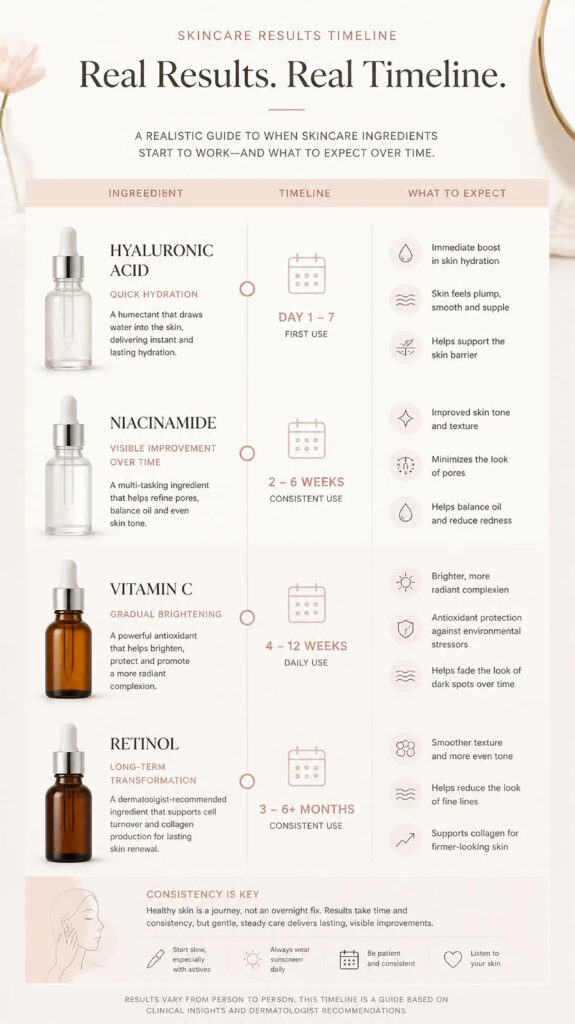
In your twenties, a full skin cell turnover cycle takes roughly 28 days. By your thirties, that extends to around 35–40 days. By your forties, it’s closer to 45–60 days, and even longer beyond that. Since most actives influence how new cells behave, you generally need at least one full turnover cycle — often more — before real change becomes visible.
Realistic timelines for common ingredients:
- Hyaluronic acid: hydration within hours to days
- Niacinamide: texture and redness improvements in 4–8 weeks
- Vitamin C: brightening in 2–4 weeks, pigmentation improvement over 8–12 weeks
- Retinol: initial texture changes around week 3–4, with significant results typically taking 3–6 months
Most dermatologists recommend giving a new product at least 8–12 weeks — a full skin cycle or two — before deciding it “doesn’t work.”
2. It’s the Wrong Product for Your Skin Type
A product that transformed your friend’s skin can genuinely do nothing for yours — or actively work against it. Someone with dry skin might thrive on a rich, occlusive cream, while the same product on oily or acne-prone skin can clog pores and trigger breakouts. Oily skin generally does better with lightweight, non-comedogenic formulas, while dry or sensitive skin needs richer, barrier-supportive ingredients. This is another core reason Why Skincare Products Not Working?
If you’ve never had your skin type properly assessed (oily, dry, combination, sensitive, or normal), that’s often the real starting point — not a new serum.
3. Your Skin Barrier Is Compromised
Your skin barrier is the outermost layer that keeps moisture in and irritants out. When it’s damaged — from over-exfoliating, harsh cleansers, or too many actives at once — it stops absorbing and responding to products properly, no matter how good those products are.
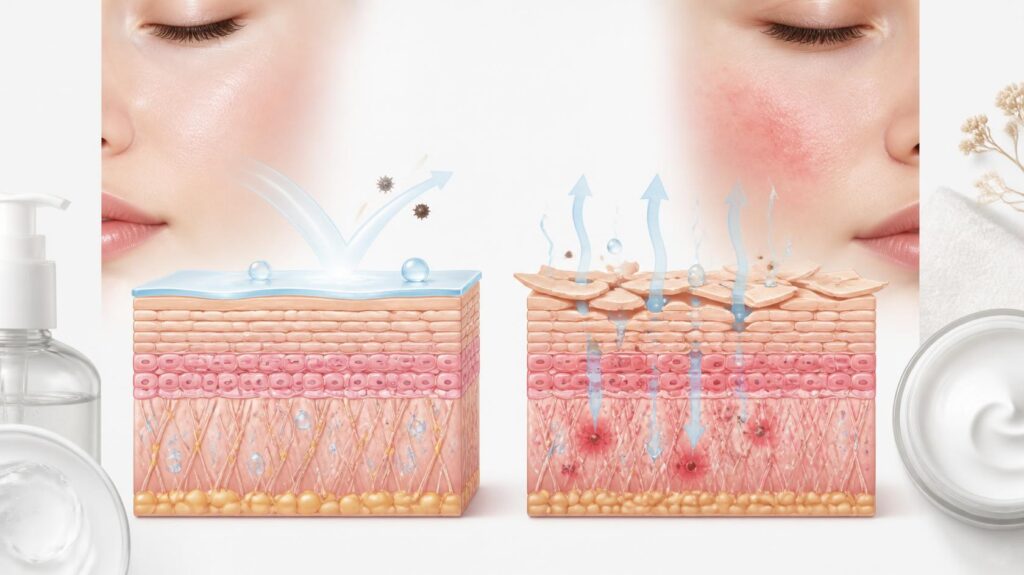
Signs of a damaged barrier include persistent redness, stinging when you apply products that never used to sting, tightness, flaking, and breakouts that seem to appear out of nowhere. When this happens, adding more product is almost always the wrong move. The fix is to strip your routine back to the basics — a gentle cleanser, a barrier-repair moisturizer, and SPF — and let your skin recover for several weeks before reintroducing actives slowly.
4. You’re Layering Ingredients Incorrectly
Not all active ingredients play well together. Combining strong acids (like AHAs or BHAs) with retinol in the same routine, for example, is one of the most common causes of redness, dryness, and irritation — which then gets misread as “this product isn’t working” when it’s actually a formulation clash.
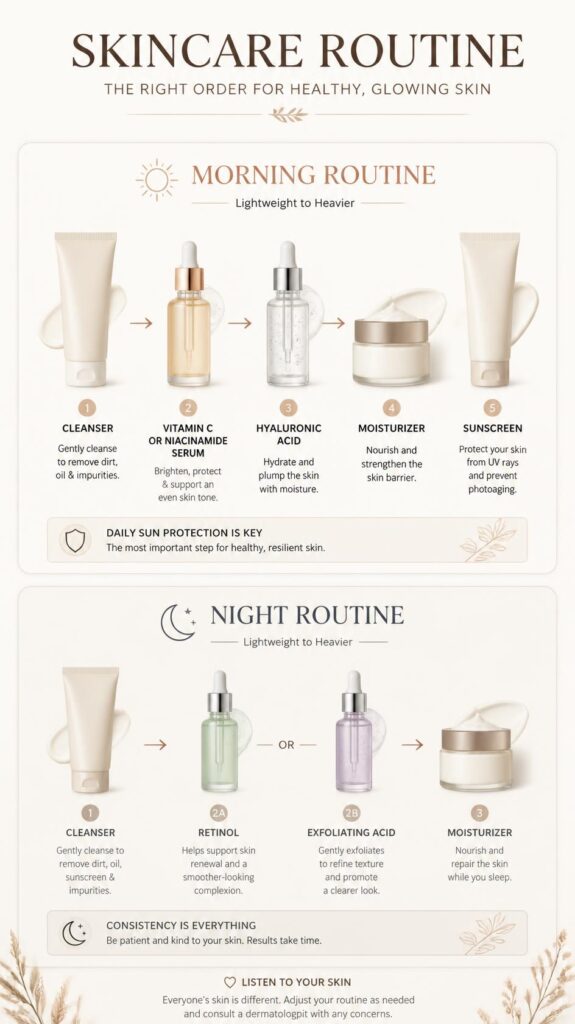
A simpler structure most dermatologists recommend:
- Morning: vitamin C, niacinamide, hyaluronic acid, moisturizer, SPF
- Night: retinol or exfoliating acids (not both), moisturizer
Application order matters too — products should generally go from thinnest to thickest consistency (cleanser, toner, serum, moisturizer, SPF). Applying a heavy cream before a serum can physically block the serum from penetrating at all.
5. The Product Has Expired or Was Stored Wrong
Most skincare products have a shelf life after opening, usually marked with a small jar icon showing a number of months (e.g., “12M”). Past that point, active ingredients can degrade and stop working — or in some cases start causing irritation or breakouts. Vitamin C is especially sensitive: exposure to light and air causes it to oxidize, turning it from an active brightening ingredient into something closer to inert (and sometimes irritating). A vitamin C serum that’s changed color from clear or pale yellow to dark amber has likely already lost most of its effectiveness.
6. Your Skin Has Actually Changed
A routine that worked perfectly two years ago can simply stop being right for your skin today. Hormonal shifts, seasonal changes, stress, diet, and aging all change how your skin behaves. The rich moisturizer that felt perfect in winter can feel too heavy in summer; the exfoliating routine that worked in your twenties can be too harsh in your thirties or forties.
Dermatologists generally recommend reassessing your skin type and routine every 6–12 months, or sooner if you notice a sudden, unexplained change.
7. You’re Using Too Many Actives at Once
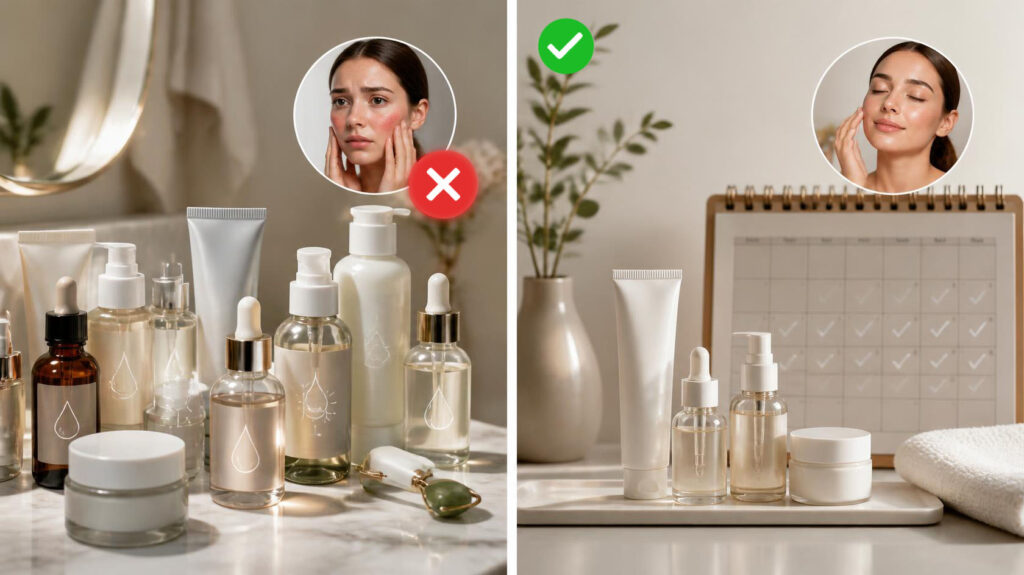
More potent ingredients don’t add up to better results — often the opposite. Stacking multiple strong actives (retinol, AHAs, BHAs, vitamin C) at the same time is one of the most common ways people accidentally damage their own barrier, which then blocks everything from working properly. If your skin feels tight, raw, or sensitized, that’s a signal to pull back, not push through.
8. You’re Not Actually Being Consistent
Clinical studies showing “results in 8 weeks” are based on daily, uninterrupted use. Skipping days, switching products frequently, or only applying something “when you remember” resets the clock more than most people realize. If your routine changes every few weeks because nothing seems to be working yet, you may never be giving any single product a fair, consistent trial.
A Realistic Skincare Timeline
| Ingredient | First signs | Full results |
|---|---|---|
| Hyaluronic acid | Within hours | 4–8 weeks |
| Niacinamide | 2–4 weeks | 8–12 weeks |
| Vitamin C | 2–4 weeks | 8–12 weeks |
| Retinol | 3–4 weeks | 3–6 months |
When It’s Time to See a Dermatologist
Over-the-counter products have real limits. If you’ve genuinely given a well-matched routine 8–12 weeks of consistent, correct use and still see no improvement — or if you’re dealing with persistent acne, melasma, or a reaction that won’t settle — that’s the point to bring in a dermatologist rather than trying yet another serum. Some concerns, especially hormonal acne or deep pigmentation, genuinely need a different approach than what’s available on a shelf.
Don’t Confuse “Purging” With “Not Working”
One thing that trips people up early on: some active ingredients — particularly retinol and exfoliating acids — can cause a temporary breakout period called “purging” as they speed up cell turnover and bring existing congestion to the surface faster than usual. This is different from a bad reaction, and it usually settles within two to six weeks.
The distinction matters because reacting to purging by stopping the product (or switching to something new) can restart the cycle indefinitely. As a general guide: purging tends to show up in areas where you normally break out and improves over time, while a true reaction or irritation tends to show up in new areas, comes with stinging or burning, and gets worse the longer you continue. If you’re ever unsure, a patch test on a small area — and a few days of pausing the product — will usually make it clear which one you’re dealing with.
The Bottom Line
Before writing off a skincare product as “not working,” it’s worth ruling out the more likely culprits first: not enough time, the wrong formula for your skin type, a compromised barrier, poor layering, an expired product, a skin type that’s quietly changed, over-use of actives, or simple inconsistency. Most skincare frustration isn’t about needing a better product — it’s about needing the right one, used the right way, for long enough to actually see what it can do.
How long should I use a skincare product before deciding it doesn’t work?
Most dermatologists recommend at least 8–12 weeks of consistent, correct use — roughly one to two full skin renewal cycles — before judging whether a product is actually working, especially for actives like retinol or vitamin C.
Why did my skincare routine suddenly stop working?
This is usually a sign that your skin itself has changed, not that the products degraded. Hormones, seasons, stress, and age all shift your skin’s needs over time, which is why dermatologists recommend reassessing your routine every 6–12 months.
Can too much skincare damage your skin?
Yes. Layering too many active ingredients — especially retinol with strong acids — is one of the most common causes of a damaged skin barrier, which then blocks products from working at all. More products or higher concentrations don’t equal faster results.
What’s the correct order to apply skincare products?
As a general rule, apply from thinnest to thickest consistency: cleanser, toner, serum, moisturizer, and SPF last in the morning. Applying a heavy cream before a serum can prevent the serum’s active ingredients from absorbing properly.
Sources referenced in this article:
- Forefront Dermatology — Is Your Skincare Routine Hurting Your Skin Barrier?
- Augustinus Bader – Skincare Routine Not Working? Here’s Why
- Clarus Dermatology — Why Your Skincare Routine Isn’t Working
- The Inkey List — How Long Does Skincare Actually Take to Work?
- The File — How Long, Per Product, It Takes to See Skincare Routine Results
- Dr. Debra Jaliman, NYC Dermatologist — Why Your Acne Products Aren’t Working
You can also check out my reviews about skin care products here: